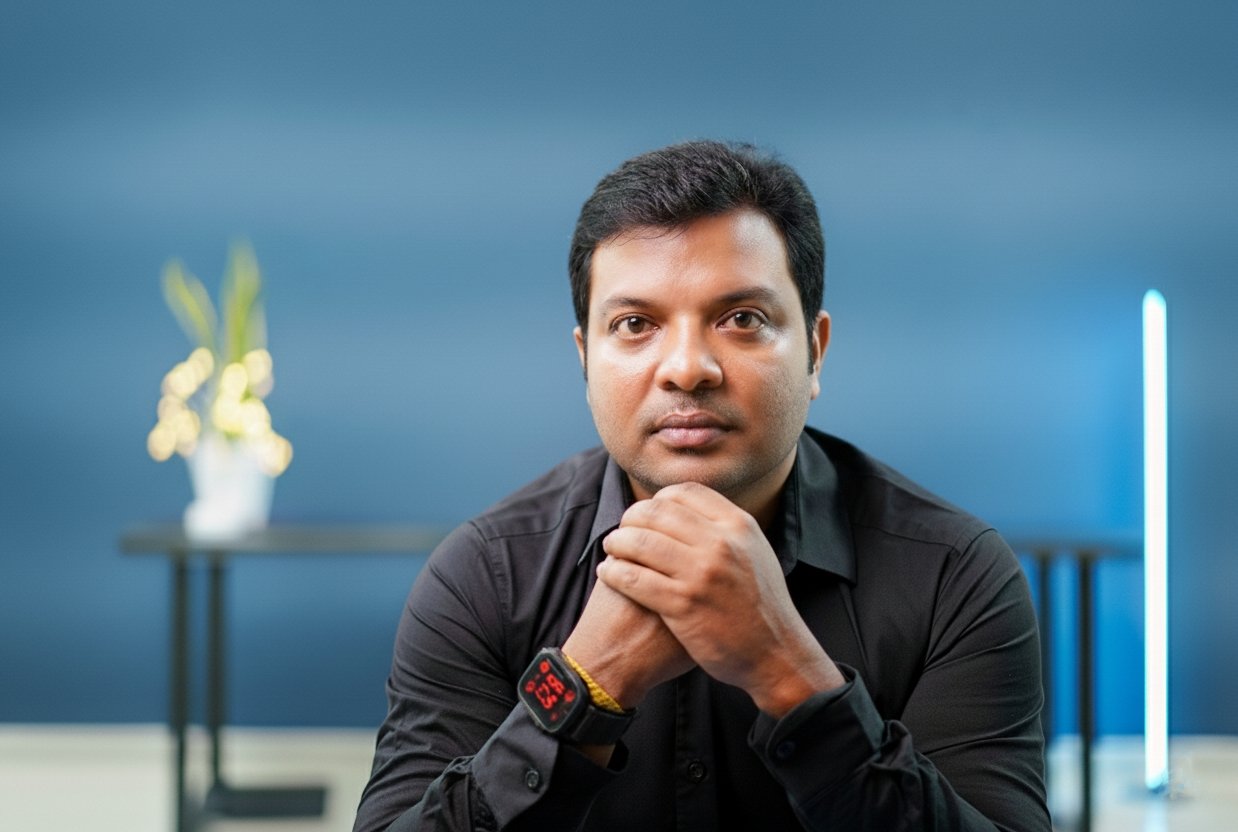
His work explores the concept that computation should not, by itself, imply authority, proposing architectural mechanisms that separate computational capability from the authority to produce externally effective consequences. This research has evolved into a broader execution-finality framework intended to govern how artificial-intelligence systems, autonomous agents, cloud platforms, telecommunications infrastructure, financial systems, and cyber-physical environments transition from computation to real-world action.
He is the inventor of the DAS Protocols (Decoupled Authorization Systems) family of international patent applications, which collectively investigate hardware-rooted and implementation-neutral execution-finality architectures, protected authorization state, mandatory mediation, technical non-completability, technical non-joinability, protected reconstruction, provenance continuity, and output-boundary governance.
The DAS Protocols portfolio presently includes:
PCT/IB2026/055615 — THE DAS PROTOCOLS (filed 4 June 2026)
PCT/IB2026/055760 — DAS PROTOCOLS – Part II (filed 7 June 2026)
PCT/IB2026/055870 — DAS PROTOCOLS – Part III (filed 10 June 2026)
PCT/IB2026/056058 — DAS PROTOCOLS – Part IV (filed 13 June 2026)
PCT/IB2026/056771 — DAS PROTOCOLS – Part V (filed 1 July 2026)
PCT/IB2026/056941 — DAS PROTOCOLS – Part VI (filed 6 July 2026)
PCT/IB2026/057198 — DAS PROTOCOLS – Part VII ( filed 12th July 2026)
In parallel with the DAS Protocols, he developed the CVID (Controlled Virtual Identity) concept, a communication-governance architecture that introduces purpose-bound, non-bearer virtual identities for privacy-preserving communications and service discovery. Rather than exposing persistent contact information, CVID proposes controlled communication paths established only after protected authorization, thereby reducing identity exposure while preserving legitimate interaction.
The overall portfolio spans enterprise artificial intelligence, agentic AI, telecommunications, cloud computing, confidential computing, cybersecurity, storage systems, digital identity, communications, provenance governance, and execution-finality architectures. Across these domains, the common objective is to establish protected technical boundaries between computation and authority, ensuring that computational capability alone does not automatically provide the ability to disclose protected information, invoke tools, perform transactions, or otherwise create externally effective consequences.
In addition to his patent work, Sangam Das is an accepted contributor to the EU AI Alliance Futurium Working Group 1 on Technology Standards and has contributed technical submissions to the European Commission’s Have Your Say portal on topics including artificial intelligence, cybersecurity, privacy-enhancing technologies, digital infrastructure, and technology standards. His work has also been formally acknowledged through correspondence from the European Commission’s Directorate-General for Communications Networks, Content and Technology (DG CONNECT).
Working independently from Balasore, Odisha, India, he continues to develop execution-finality architectures intended as foundational technical frameworks for future artificial-intelligence systems and digital infrastructure, with an emphasis on practical implementation, standards-oriented interoperability, and secure governance of computation-to-consequence transitions.